Introducing the 2026–27 AMPLify Winners: Future Leaders in Stereotactic and Functional Neurosurgery
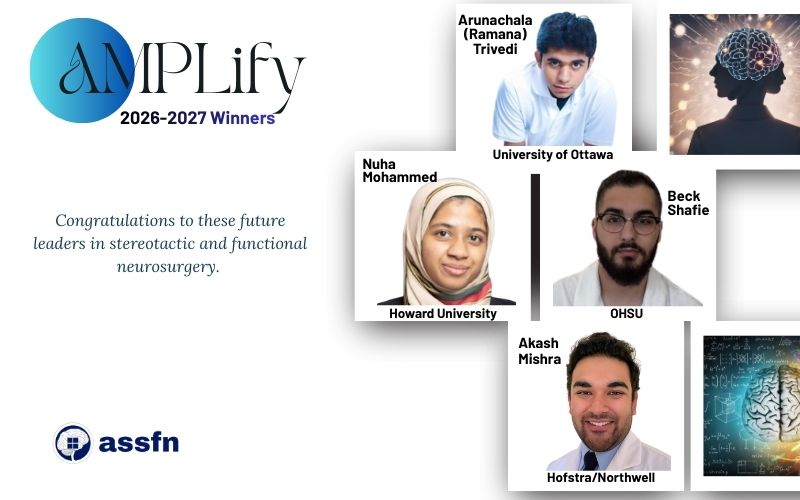
Four medical students and trainees from across North America demonstrate the drive and dedication to advancing what we know and practice in stereotactic and functional neurosurgery. We’re proud to introduce this year’s AMPLify Fellowship Award recipients and celebrate their work to strengthen our community, expand the boundaries of functional neurosurgery research and, ultimately, provide care for the patients who rely on us most.
The ASSFN AMPLify fellowship program was created to elevate emerging leaders with the vision, energy, and dedication to help shape what comes next for stereotactic and functional neurosurgery. The 2026–27 AMPLify winners represent thoughtful who understand that meaningful progress happens at the intersection of innovation, creativity, and purpose.

Meet Arunachala (Ramana) Trivedi, MD, MSc, PGY-5 Resident at the University of Ottawa. Ramana’s mentor is Dr. Andres Lozano from the University of Toronto. Ramana will be pursuing his research on the influence of cardiac parameters on neural signals in Dr. Lozano’s lab, which mirror Dr. Lozano’s own recent work in this area.
The AMPLify fellowship will support his research in the 2026-2027 year at his current institution, the University of Ottawa, and allow him to get a head start on longitudinal research project that will extend into his fellowship.
Ramana is motivated by his grandparents, who were individually diagnosed with Alzheimer’s and Parkinson’s disease. This ignited an interest in neurodegenerative conditions. Later, medical school introduced him to neurosurgical experiences that captured his interest.
“The AMPLify program enables me to devote dedicated time to functional research while gaining valuable exposure to a new neurosurgical team. Functional neurosurgery is unique in this regard as it bridges clinical impact with fundamental neuroscience.”

Nuha Mohammed is a third-year medical student at Howard University College of Medicine’s highly selective and accelerated six-year BS/MD program. Nuha’s mentor is Dr. Sarah Bick at Vanderbilt University Medical Center. Nuha will investigate how reward-related beta oscillations in the STN, GPi, and DLPFC are modulated by intraoperative deep brain stimulation, and how these changes relate to patient behavior.
According to Nuha, this experience will also provide her with critical exposure to the clinical workflow of functional neurosurgery, including patient interaction, surgical planning, and the translation of research findings into clinical practice. Howard University College of Medicine currently does not have a residency program in neurosurgery.
“As a student without a home neurosurgery residency program or functional neurosurgery division, receiving the AMPLify Fellowship Award is an invaluable opportunity for me to gain research, mentorship, and clinical experiences in functional neurosurgery that I wouldn’t otherwise have.”

Beck Shafie is a third-year medical student at Oregon Health & Science University. Beck’s mentor is Dr. Jon T. Willie at the University of Texas at Austin.
For Beck, stereotactic and functional neurosurgery is the intersection of circuits and computer science, with the opportunity to make meaningful differences in patients’ lives.
The field uses computational approaches to understand and modulate neural circuits in patients with neurological and psychiatric disorders. What excites Beck is the research potential.
“We’re asking fundamental questions about how the brain works while developing interventions that directly help patients. That combination of investigation and clinical impact draws me to this work.”
Beck is honored to be selected for the ASSFN AMPLify Fellowship Program.
“It represents validation of my commitment to pursuing a career in stereotactic and functional neurosurgery and provides invaluable mentorship, exposure, and community within the field.”
The heart of the program offers AMPLify winners an opportunity to engage closely with leaders who are shaping the future of neuromodulation and functional neurosurgery.
“It will play a critical role in my professional development as I continue to build a career at the interface of clinical care, research, and innovation.”
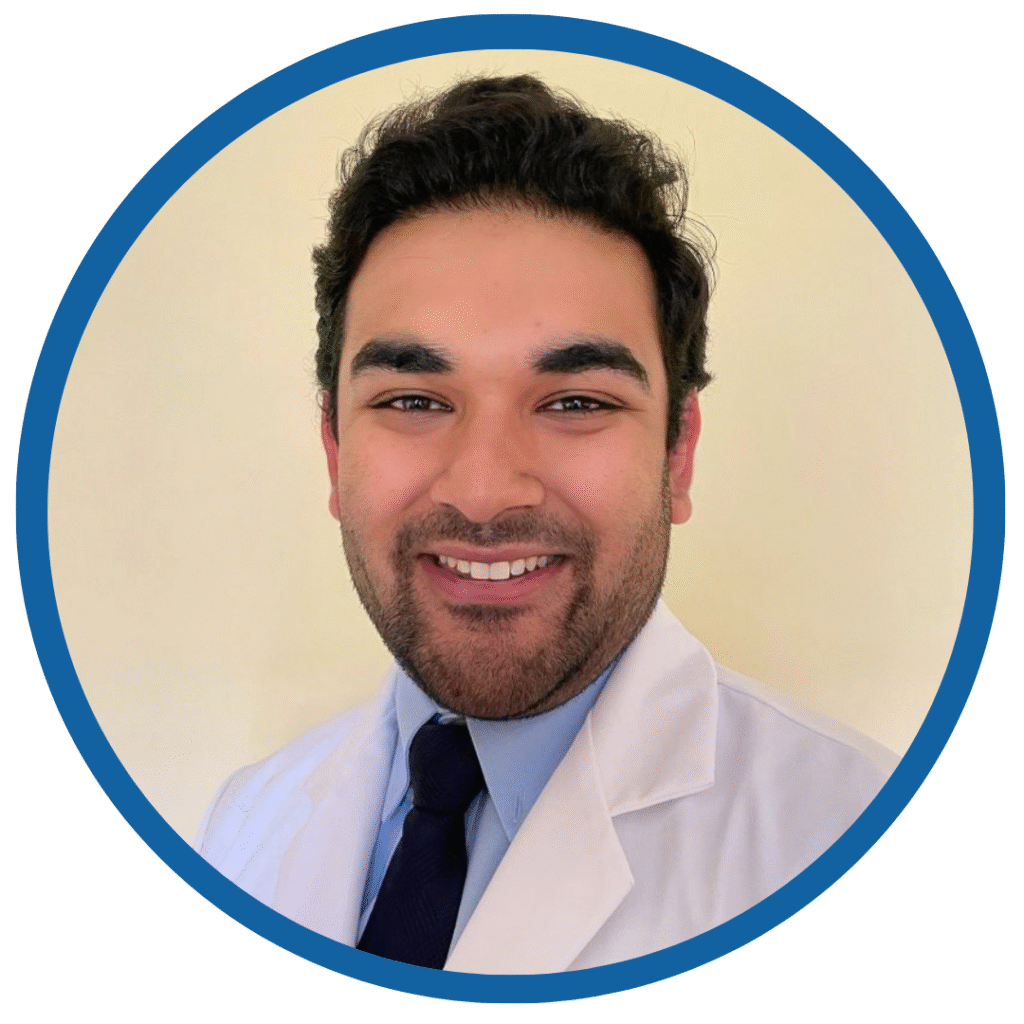
Akash Mishra is a fifth-year MD/PhD student at the Zucker School of Medicine at Hofstra/Northwell. Akash’s mentor is Dr. John Rolston at Mass General Brigham and Harvard Medical School.
Akash will focus on the development and application of network-based approaches for neuromodulation therapies and aims to reveal the brain network mechanisms that underlie depression.
He believes that the field of functional neurosurgery and neuromodulation would greatly benefit from the next level of connectomics beyond structural and functional connectivity to include more dynamic, causal estimates that can be identified via brain stimulation.
“The ASSFN AMPLify program will position me at the forefront of the field and accelerate my progress toward my career goal of becoming a functional neurosurgeon and neuroscientist who is dedicated to advancing personalized, biomarker-based DBS therapies for neuropsychiatric conditions.”

Dario J. Englot, MD, PhD
Vanderbilt University Medical Center
In This Issue
Winter 2025/6
- Looking Ahead with Purpose: President’s Welcome
- Building Bridges: Experience ASSFN 2026!
- Introducing the 2026–27 AMPLify Winners: Future Leaders in Stereotactic and Functional Neurosurgery
- Functional Neurosurgery Fellowships Now Available on SF Match
- Greats of Neurosurgery: Russell Meyers’ Enduring Impact on Functional Neurosurgery
- 2026 ASSFN Webinars & Podcasts Lineup
- Call for Volunteers
- Access Clinical Resources for Members
- Upcoming Events